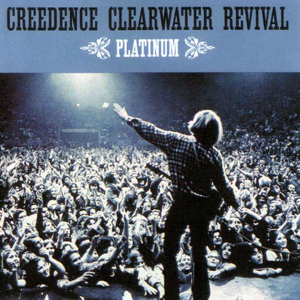
Down on the Corner
Creedence Clearwater Revival
cover
John Fogerty
Listen to the Song
Summary
Serving as the lead single for the 1969 album Willy and the Poor Boys, this track defines the band's swamp rock aesthetic and reached number three on the Billboard Hot 100. John Fogerty drafted the lyrics after seeing a Winnie the Pooh advertisement, creating a narrative about street musicians that remains a cornerstone of classic rock radio.
Musical Analysis
The harmonic structure is a textbook example of early rock and roll and roots rock, utilizing only the three primary major triads (I, IV, V). The song's distinctiveness comes from its rhythmic delivery—often described as a 'calypso' or 'swamp rock' beat—rather…
Chords
History
John Fogerty was inspired by a newspaper advertisement for Disney's Winnie the Pooh. The phrase 'Winnie the Pooh and the Pooh Boys' stuck in his mind and evolved into 'Willy and the Poor Boys.' The lyrics describe a fictional street band that plays for nickels…
“The song explicitly mentions a harmonica, washboard, kazoo, Kalamazoo guitar, and gut bass.”
Full Musical Analysis
The harmonic structure is a textbook example of early rock and roll and roots rock, utilizing only the three primary major triads (I, IV, V). The song's distinctiveness comes from its rhythmic delivery—often described as a 'calypso' or 'swamp rock' beat—rather than harmonic complexity. The guitar work emphasizes the root and fifth of each chord, mirroring the 'gut bass' and 'Kalamazoo' aesthetic described in the lyrics. The progression avoids any minor chords or seventh extensions, maintaining a bright, major-key tonality that supports the street-performer narrative.
John Fogerty was inspired by a newspaper advertisement for Disney's Winnie the Pooh. The phrase 'Winnie the Pooh and the Pooh Boys' stuck in his mind and evolved into 'Willy and the Poor Boys.' The lyrics describe a fictional street band that plays for nickels on the corner to cheer people up, using makeshift and traditional instruments like a washboard and gut bass.
Serving as the lead single for the 1969 album Willy and the Poor Boys, this track defines the band's swamp rock aesthetic and reached number three on the Billboard Hot 100. John Fogerty drafted the lyrics after seeing a Winnie the Pooh advertisement, creating a narrative about street musicians that remains a cornerstone of classic rock radio.
Deep Analysis Available
Detailed analysis of this section is not yet available for this song.
Song DNA
Genre
Roots Rock
Era
60s
Mood
Uplifting
Tempo
Upbeat
Key
Major
Texture
Full Band
Sound
Guitar-driven
Feel
Syncopated
Explore More
More by Creedence Clearwater Revival
See all songs →Similar Songs
Explore related
Statistics
4.6M
Plays
866K
Listeners
352K
Genius Views
8
Annotations
100%
Popularity
2:46
Duration
4/4
Time
Credits
Written by
Produced by
From the album cover
Chord Sheet
Chords Used
Progression by Section
Chorus
Verse