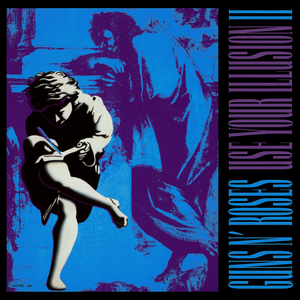
Civil War
Guns N' Roses
Duff McKagan, Slash, Axl Rose
Listen to the Song
Summary
Originally released on the 1990 charity compilation Nobody's Child: Romanian Angel Appeal, Civil War reached #4 on the US Mainstream Rock chart before Geffen issued it as a worldwide single in 1993, when it hit #2 in Spain and topped the chart in Poland. The song stands apart in the GN'R catalog for its restraint — Axl Rose's vocals sit closer to resignation than defiance, while Slash layers acoustic and electric guitars over Dizzy Reed's piano. It remains a live staple and, since 2022, the band displays the Ukrainian flag during the performance.
Musical Analysis
Civil War draws on the same natural minor vocabulary that runs through the hard rock ballad tradition — Dm, C, Bb, A — but the harmonic interest is less in the chord choices than in the architecture. The song earns its eight-minute runtime through the gradual…
Chords
History
Slash wrote the core of Civil War as an instrumental riff he developed just before Guns N' Roses left for the Japanese leg of the Appetite for Destruction world tour in 1988. The song took proper shape at a soundcheck in Melbourne, Australia, where Axl Rose be…
“The song opens with a voice-over sample: 'What we've got here is a failure to communicate' — a line spoken by Strother Martin in the 1967 film Cool Hand Luke.”
Full Musical Analysis
Civil War draws on the same natural minor vocabulary that runs through the hard rock ballad tradition — Dm, C, Bb, A — but the harmonic interest is less in the chord choices than in the architecture. The song earns its eight-minute runtime through the gradual accumulation of layers: sparse acoustic intro, piano (Dizzy Reed) entering mid-song, full electric band arriving later. Blues influence shows up in Slash's bending lead lines rather than in explicit blues chord moves. The overall progression is deliberate and unhurried, which is precisely what the protest lyric requires.
Slash wrote the core of Civil War as an instrumental riff he developed just before Guns N' Roses left for the Japanese leg of the Appetite for Destruction world tour in 1988. The song took proper shape at a soundcheck in Melbourne, Australia, where Axl Rose began adding lyrics. Duff McKagan contributed from personal memory: as a four-year-old he had marched with his mother at a peace demonstration for Martin Luther King, which became the source of the line about 'the man who said peace could last forever.' Rose's lyrics drew additional inspiration from a man he knew only as Riad — a former acquaintance of his then-girlfriend Erin Everly who claimed to be an international arms dealer and financier. The same figure later inspired the song Riad N' The Bedouins.
Originally released on the 1990 charity compilation Nobody's Child: Romanian Angel Appeal, Civil War reached #4 on the US Mainstream Rock chart before Geffen issued it as a worldwide single in 1993, when it hit #2 in Spain and topped the chart in Poland. The song stands apart in the GN'R catalog for its restraint — Axl Rose's vocals sit closer to resignation than defiance, while Slash layers acoustic and electric guitars over Dizzy Reed's piano. It remains a live staple and, since 2022, the band displays the Ukrainian flag during the performance.
Deep Analysis Available
Detailed analysis of this section is not yet available for this song.
Song DNA
Genre
Rock
Era
90s
Mood
Dark
Tempo
Mid-tempo
Key
Minor
Texture
Full Band
Sound
Guitar-driven
Feel
Straight
Explore More
More by Guns N' Roses
See all songs →Explore related
Statistics
5.1M
Plays
755K
Listeners
432K
Genius Views
27
Annotations
100%
Popularity
8:17
Duration
4/4
Time