Listen to the Song
Song DNA
Genre
Pop
Era
2010s
Mood
Melancholic
Tempo
Mid-tempo
Key
Major
Texture
Layered
Sound
Synth-heavy
Feel
Straight
Katy Perry
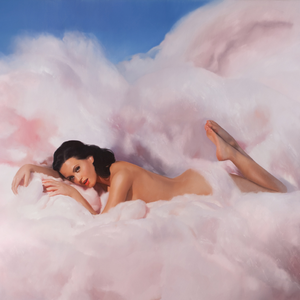
Teenage Dream (2010)
Dr. Luke, Max Martin, Katy Perry
Serving as the emotional centerpiece of the record-breaking 'Teenage Dream' album, this track showcases Katy Perry's storytelling depth through a nostalgic lens. Produced by Max Martin and Dr. Luke, it blends radio-friendly pop with a vulnerable narrative about missed timing and lasting regret.
The song's harmonic identity is defined by its refusal to use the standard dominant (V) chord in its primary loop. By substituting the G#m (iii) for the B (V), the progression (I-iii-vi-IV) creates a sense of 'smooth' emotional descent. This is facilitated by…
Katy Perry wrote the song to explore the theme of nostalgia and the realization that people often don't realize the value of a moment or person until they are gone. She intended for it to be a more mature and somber contrast to the 'candy-coated' themes of oth…
“The song references Radiohead's 1995 album 'The Bends' in the opening verse.”
The song's harmonic identity is defined by its refusal to use the standard dominant (V) chord in its primary loop. By substituting the G#m (iii) for the B (V), the progression (I-iii-vi-IV) creates a sense of 'smooth' emotional descent. This is facilitated by voice-leading: the E major chord contains (E, G#, B) and the G#m chord contains (G#, B, D#), sharing two common tones and creating a much more subtle transition than a standard I-V jump. This highlights the nostalgic and regretful themes of the lyrics.
Katy Perry wrote the song to explore the theme of nostalgia and the realization that people often don't realize the value of a moment or person until they are gone. She intended for it to be a more mature and somber contrast to the 'candy-coated' themes of other tracks on the Teenage Dream album.
Serving as the emotional centerpiece of the record-breaking 'Teenage Dream' album, this track showcases Katy Perry's storytelling depth through a nostalgic lens. Produced by Max Martin and Dr. Luke, it blends radio-friendly pop with a vulnerable narrative about missed timing and lasting regret.
Detailed analysis of this section is not yet available for this song.
Genre
Pop
Era
2010s
Mood
Melancholic
Tempo
Mid-tempo
Key
Major
Texture
Layered
Sound
Synth-heavy
Feel
Straight
20.3M
Plays
1.9M
Listeners
1.2M
Genius Views
14
Annotations
100%
Popularity
3:47
Duration
4/4
Time
From the album Teenage Dream
Harmony The song's harmonic identity is defined by its refusal to use the standard dominant (V) chord in its primary loop. By substituting the G#m (iii) for the B (V), the progression (I-iii-vi-IV) creates a sense of 'smooth' emotional descent. This is facilitated by voice-leading: the E major chord contains (E, G#, B) and the G#m chord contains (G#, B, D#), sharing two common tones and creating a much more subtle transition than a standard I-V jump. This highlights the nostalgic and regretful themes of the lyrics. Deep Analysis Available Detailed analysis of this section is not yet available for this song. Request Full Analysis
No musician information available for this song yet.
Composition Katy Perry wrote the song to explore the theme of nostalgia and the realization that people often don't realize the value of a moment or person until they are gone. She intended for it to be a more mature and somber contrast to the 'candy-coated' themes of other tracks on the Teenage Dream album. Inspiration: The lyrics were inspired by a desire to convey a universal sense of loss. It features specific cultural references, including the rock band Radiohead and the enduring relationship of Johnny Cash and June Carter Cash, used to illustrate the depth of the lost connection. Recording Studio: Conway Recording Studios (Hollywood, CA); Playback Recording Studio (Santa Barbara, CA) Producer: Dr. Luke, Max Martin The song references Radiohead's 1995 album 'The Bends' in the opening verse. A special 'Director's Cut' of the music video exists, which features an extended narrative starring actor Diego Luna. To help the song reach number one and break the record for most number-one singles from a single album, a remix featuring rapper B.o.B was released in late 2011.
Chord Sheet Chords Used Hide functions E I T G#m iii T C#m vi T A IV P Progression by Section Bridge C#m vi B V D A IV P F#m ii P G#m iii A IV P B V D Chorus E I T G#m iii C#m vi A IV P Verse E I T G#m iii C#m vi A IV P Chord Fingerings E Standard G#m Standard C#m Standard A Standard Harmony Analysis The song's harmonic identity is defined by its refusal to use the standard dominant (V) chord in its primary loop. By substituting the G#m (iii) for the B (V), the progression (I-iii-vi-IV) creates a sense of 'smooth' emotional descent. This is facilitated by voice-leading: the E major chord contains (E, G#, B) and the G#m chord contains (G#, B, D#), sharing two common tones and creating a much more subtle transition than a standard I-V jump. This highlights the nostalgic and regretful themes of the lyrics. Find Tabs & Chords Songsterr Interactive tabs Ultimate Guitar Chords & tabs Cifra Club Chords
🎶 Similar Tracks Teenage Dream Katy Perry Wide Awake Katy Perry Love You Like a Love Song Selena Gomez & the Scene Lover Taylor Swift Criminal Britney Spears no tears left to cry Ariana Grande 🎤 More by Katy Perry I Kissed a Girl 22.9M plays Hot n Cold 19.9M plays Last Friday Night (T.G.I.F.) 22.7M plays Teenage Dream 24.3M plays Firework 18.8M plays The One That Got Away 20.3M plays View all Katy Perry songs → Lyrics View Lyrics on Genius
