Ex-Factor
Ms. Lauryn Hill
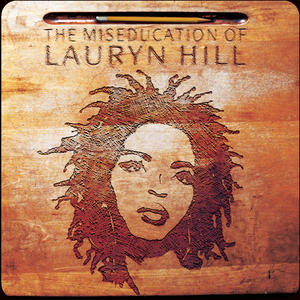
The Miseducation of Lauryn Hill (1998)
Alan Bergman, Ghostface Killah, GZA +9
Listen to the Song
At a glance
- Key
- D minor
- Time signature
- 4/4
- Main progression
- i–VII
- Chords used
- Dm · C
Summary
Released in December 1998 as the second single from The Miseducation of Lauryn Hill, 'Ex-Factor' is a self-written and self-produced soul track widely reported to address Hill's relationship with former Fugees bandmate Wyclef Jean. Its spare harmonic palette — two-chord progressions repeated across every melodic variation — made the emotional weight land entirely on Hill's voice. The song peaked at number seven on the Hot R&B/Hip-Hop Songs chart, reached number four in the UK, and has since been sampled by Drake and Cardi B, covered by Beyoncé, and listed among the greatest breakup songs of all time by Time and The Ringer.
Chord Sheet
Chords Used
Progression by Section
Chorus
Verse
Chord Diagrams
Musical Analysis
What distinguishes 'Ex-Factor' harmonically is what it refuses to do. By locking the entire track into a two-chord Dm–C loop and never reaching for a V chord or any functional resolution, Hill creates a sonic parallel to the lyric: a situation that cycles with…
History
Lauryn Hill wrote and produced 'Ex-Factor' entirely herself, building it around replayed elements of Wu-Tang Clan's 'Can It Be All So Simple' — a track that itself lifted from Gladys Knight & the Pips' recording of the Bergman/Hamlisch composition 'The Way We…
“Hill produced the track herself, making her one of the few major-label artists of the era to write, produce, and perform a Top 10 R&B hit without a co-producer”
Full musical analysis
What distinguishes 'Ex-Factor' harmonically is what it refuses to do. By locking the entire track into a two-chord Dm–C loop and never reaching for a V chord or any functional resolution, Hill creates a sonic parallel to the lyric: a situation that cycles without closure. The sample source — 'Can It Be All So Simple' by Wu-Tang Clan — carries a similarly understated harmonic mood, so the choice of source material reinforces rather than complicates the original progression. The harmonic interest comes not from chord movement but from the layering of Hill's own harmonies over a deliberately static foundation.
Lauryn Hill wrote and produced 'Ex-Factor' entirely herself, building it around replayed elements of Wu-Tang Clan's 'Can It Be All So Simple' — a track that itself lifted from Gladys Knight & the Pips' recording of the Bergman/Hamlisch composition 'The Way We Were'. Because of this chain of interpolation, the final songwriting credits extend to Wu-Tang Clan members as well as Alan Bergman, Marilyn Bergman, and Marvin Hamlisch. The result is a song whose credits span hip-hop, classic soul, and 1970s pop songwriting.
Released in December 1998 as the second single from The Miseducation of Lauryn Hill, 'Ex-Factor' is a self-written and self-produced soul track widely reported to address Hill's relationship with former Fugees bandmate Wyclef Jean. Its spare harmonic palette — two-chord progressions repeated across every melodic variation — made the emotional weight land entirely on Hill's voice. The song peaked at number seven on the Hot R&B/Hip-Hop Songs chart, reached number four in the UK, and has since been sampled by Drake and Cardi B, covered by Beyoncé, and listed among the greatest breakup songs of all time by Time and The Ringer.
Some sections are still pending
6 of 12 sections are ready. Ask for the rest and this song moves up our analysis queue.
Song DNA
Genre
R&B
Era
90s
Mood
Melancholic
Tempo
Slow
Key
Minor
Texture
Layered
Sound
Vocal-focused
Feel
Groovy
Explore More
Similar Songs
Explore related
Statistics
1.6M
Plays
319K
Listeners
824K
Genius Views
16
Annotations
100%
Popularity
5:27
Duration
4/4
Time
Credits
Written by
Produced by
From the album The Miseducation of Lauryn Hill