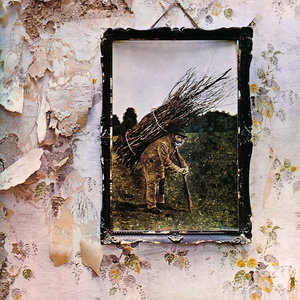
The Battle of Evermore
Led Zeppelin
sleeve
Robert Plant, Jimmy Page
Listen to the Song
Summary
Released on Led Zeppelin IV in November 1971, 'The Battle of Evermore' stands apart from the band's hard rock catalog as an acoustic folk meditation rooted in Tolkien mythology. Sandy Denny of Fairport Convention trades verses with Robert Plant in a question-and-answer format — narrator and town crier — that remains unique across the entire Zeppelin catalog. The song's sparse mandolin-driven arrangement and medieval imagery made it an unlikely but enduring highlight of one of rock's most celebrated albums.
Musical Analysis
The harmony works from a small palette deployed in a modal rather than functional framework. The D major chord (IV) borrowed into an A minor context raises the sixth degree — a hallmark of the Dorian mode — and pushes the sound away from classical minor-key te…
Chords
History
Jimmy Page and Robert Plant wrote the song spontaneously at Headley Grange in 1971. Page, who had never played mandolin before, picked up John Paul Jones's instrument and worked out the chords on the spot. As Page described in 1977: 'I just picked up John Paul…
“This is the only Led Zeppelin studio recording to feature a guest vocalist”
📝 Lyrics
melancholic · urgent · hauntingTheme
Epic fantasy warfare, the cost of battle, and the longing for peace
Surface
A folk ballad set during a great medieval battle, told through two contrasting voices: a narrator surveying the chaos and a town crier summoning the people to arms.
Deeper meaning
Plant uses the borrowed mythology of Tolkien's Middle-earth to explore real human themes — the weight of war, the grief of those left behind, and the impossible distance between a remembered pastoral peace and the encroaching darkness. The dual-voice structure (Plant as narrator, Sandy Denny as town crier) gives the song a communal, almost ritualistic quality, as though the tragedy being described belongs to everyone.
Symbols
Full Musical Analysis
The harmony works from a small palette deployed in a modal rather than functional framework. The D major chord (IV) borrowed into an A minor context raises the sixth degree — a hallmark of the Dorian mode — and pushes the sound away from classical minor-key tension toward the static, droning quality of British folk. There are no conventional dominant-to-tonic resolutions; the song lingers on i–VII alternations that mirror its imagery of unresolved battle and foreboding. The mandolin timbre reinforces this pre-tonal character, and the result sits closer to a medieval ballad than to blues-based rock, which is entirely intentional given the Tolkien subject matter.
Jimmy Page and Robert Plant wrote the song spontaneously at Headley Grange in 1971. Page, who had never played mandolin before, picked up John Paul Jones's instrument and worked out the chords on the spot. As Page described in 1977: 'I just picked up John Paul Jones's mandolin, never having played a mandolin before, and just wrote up the chords and the whole thing in one sitting.' Plant crafted the lyrics around imagery drawn from J.R.R. Tolkien's The Lord of the Rings, threading in references to Ringwraiths, the Dark Lord, and battle runes.
Released on Led Zeppelin IV in November 1971, 'The Battle of Evermore' stands apart from the band's hard rock catalog as an acoustic folk meditation rooted in Tolkien mythology. Sandy Denny of Fairport Convention trades verses with Robert Plant in a question-and-answer format — narrator and town crier — that remains unique across the entire Zeppelin catalog. The song's sparse mandolin-driven arrangement and medieval imagery made it an unlikely but enduring highlight of one of rock's most celebrated albums.
Deep Analysis Available
Detailed analysis of this section is not yet available for this song.
Song DNA
Genre
Folk
Era
70s
Mood
Nostalgic
Tempo
Slow
Key
Minor
Texture
Sparse
Sound
Acoustic
Feel
Straight
Explore More
More by Led Zeppelin
See all songs →Similar Songs
Explore related
Statistics
3.4M
Plays
599K
Listeners
225K
Genius Views
15
Annotations
100%
Popularity
6:34
Duration
4/4
Time
Credits
Written by
Produced by
From the album sleeve
Chord Sheet
Chords Used
Progression by Section
Chorus
Verse