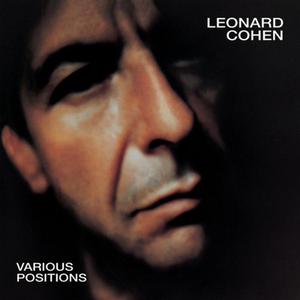
Dance Me to the End of Love
Leonard Cohen
Dance Me to the End of Love (1984)
Leonard Cohen
Listen to the Song
Summary
Released on Leonard Cohen's 1984 album Various Positions and produced by John Lissauer, 'Dance Me to the End of Love' is one of Cohen's most celebrated compositions. Cloaked in the imagery of romantic surrender, its true subject is the string orchestras forced to play classical music beside the crematoria of Nazi death camps. Its klezmer-inflected instrumentation and poetic double-meaning have led critics to describe it as 'trembling on the brink of becoming a standard,' and it has since been covered by artists across jazz, folk, and classical traditions.
Musical Analysis
The harmony is deceptively simple — a cyclical i–VII–VI–V pattern that never resolves in a conventional tonal sense — but its power derives from the klezmer and Jewish folk tradition it consciously invokes. The recurring major V chord against a minor-key backd…
Chords
History
Leonard Cohen wrote 'Dance Me to the End of Love' after contemplating the forced orchestras of Nazi death camps — musicians pressed into performing classical music beside the crematoria while their fellow prisoners were executed and burned. He transformed this…
“The instrumentation is deliberately evocative of traditional klezmer music — Cohen identified deeply with his Jewish musical heritage and described his songs as inherently Jewish i…”
Full Musical Analysis
The harmony is deceptively simple — a cyclical i–VII–VI–V pattern that never resolves in a conventional tonal sense — but its power derives from the klezmer and Jewish folk tradition it consciously invokes. The recurring major V chord against a minor-key backdrop creates modal ambiguity that mirrors the song's refusal to let love and death resolve into separate categories.
Leonard Cohen wrote 'Dance Me to the End of Love' after contemplating the forced orchestras of Nazi death camps — musicians pressed into performing classical music beside the crematoria while their fellow prisoners were executed and burned. He transformed this historical reality into a song that reads, on its surface, as a tender love poem, exploiting the fact that the language of passionate romantic surrender and the language of mortal finality are nearly identical. The phrase 'Dance me to your beauty with a burning violin' refers simultaneously to erotic devotion and to the literal burning of violins — and violinists — in the camps.
Released on Leonard Cohen's 1984 album Various Positions and produced by John Lissauer, 'Dance Me to the End of Love' is one of Cohen's most celebrated compositions. Cloaked in the imagery of romantic surrender, its true subject is the string orchestras forced to play classical music beside the crematoria of Nazi death camps. Its klezmer-inflected instrumentation and poetic double-meaning have led critics to describe it as 'trembling on the brink of becoming a standard,' and it has since been covered by artists across jazz, folk, and classical traditions.
Deep Analysis Available
Detailed analysis of this section is not yet available for this song.
Song DNA
Genre
Folk
Era
80s
Mood
Melancholic
Tempo
Slow
Key
Minor
Texture
Sparse
Sound
Acoustic
Feel
Straight
Explore More
More by Leonard Cohen
See all songs →Similar Songs
Explore related
Statistics
2.0M
Plays
319K
Listeners
207K
Genius Views
20
Annotations
100%
Popularity
4:40
Duration
4/4
Time
Credits
Written by
Produced by
From the album Dance Me to the End of Love