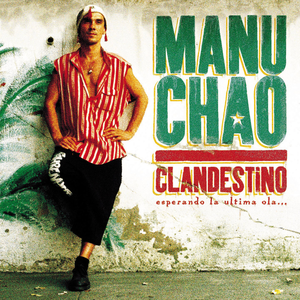
Bongo Bong
Manu Chao
Manu
Manu Chao
Listen to the Song
Summary
"Bongo Bong" launched Manu Chao's solo career in 1998, reworking his Mano Negra track "King of Bongo" over a riddim borrowed from Black Uhuru. With its stripped-down production, chanted lyrics about a bongo player from the Congo, and irresistible groove, it became a pan-European hit and an anthem of the late-90s world music movement.
Musical Analysis
"Bongo Bong" is harmonically minimalist by design — a two-chord reggae vamp (i–♭VII) that never resolves to a dominant. This deliberate harmonic stasis is central to the song's hypnotic quality: without cadential pull, the listener is drawn into the groove and…
Chords
History
"Bongo Bong" originated as a reworking of "King of Bongo," a track from Manu Chao's former band Mano Negra. After Mano Negra dissolved in 1995, Chao spent years traveling through Latin America and recording lo-fi demos on portable equipment. He reimagined the…
“The backing riddim was taken from Black Uhuru's "Bull ina di Pen" from their 1984 album Anthem”
Full Musical Analysis
"Bongo Bong" is harmonically minimalist by design — a two-chord reggae vamp (i–♭VII) that never resolves to a dominant. This deliberate harmonic stasis is central to the song's hypnotic quality: without cadential pull, the listener is drawn into the groove and vocal melody rather than following chord changes. The ♭VII (G natural in A minor) gives the progression a modal, rootless quality common in reggae and ska, avoiding the tension-release patterns of Western pop harmony. The simplicity is the point — it makes the song universally accessible and endlessly loopable.
"Bongo Bong" originated as a reworking of "King of Bongo," a track from Manu Chao's former band Mano Negra. After Mano Negra dissolved in 1995, Chao spent years traveling through Latin America and recording lo-fi demos on portable equipment. He reimagined the song with a stripped-down reggae feel, layering his vocals over the riddim from Black Uhuru's "Bull ina di Pen" and borrowing the title and lyrical concept from Roy Eldridge's 1939 jazz composition "King of Bongo Bong."
"Bongo Bong" launched Manu Chao's solo career in 1998, reworking his Mano Negra track "King of Bongo" over a riddim borrowed from Black Uhuru. With its stripped-down production, chanted lyrics about a bongo player from the Congo, and irresistible groove, it became a pan-European hit and an anthem of the late-90s world music movement.
Deep Analysis Available
Detailed analysis of this section is not yet available for this song.
Song DNA
Genre
Folk
Era
90s
Mood
Uplifting
Tempo
Mid-tempo
Key
Minor
Texture
Sparse
Sound
Acoustic
Feel
Groovy
Explore More
Similar Songs
Explore related
Statistics
4.8M
Plays
699K
Listeners
185K
Genius Views
1
Annotations
100%
Popularity
2:38
Duration
4/4
Time
Credits
Written by
Produced by
Featuring
From the album Manu
Chord Sheet
Chords Used
Progression by Section
Chorus
Verse