Summer in the City
The Lovin' Spoonful
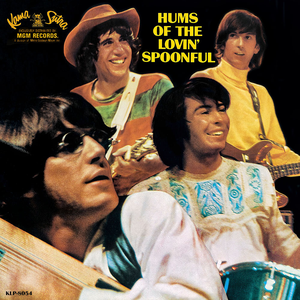
Hums
John Sebastian, Mark Sebastian, Steve Boone
Listen to the Song
Summary
A radical departure from the Lovin' Spoonful's jug-band folk-pop, 'Summer in the City' fused driving minor-key rock with actual city noise — car horns and a pneumatic drill — to create an immersive portrait of New York in a heat wave. Released in July 1966, it became the band's only chart-topper and an early landmark in pop's use of environmental sound. Its day-vs-night lyrical contrast, mirrored by a deliberate harmonic shift, gave the song a structural sophistication rare for its era.
Musical Analysis
The song's defining harmonic gesture is the intentional clash between a tense minor-key verse and a brighter chorus — a structural choice that maps directly onto the lyrical contrast between oppressive day and liberating night. The bridge introduces a third ha…
Chords
History
John Sebastian, the Lovin' Spoonful's principal songwriter, recalled a song his teenage brother Mark had informally taped, originally titled 'It's a Different World.' Mark had written it at age 14 with a bossa nova-like feel and rudimentary lyrics in the style…
“The recording incorporates car horns and a pneumatic drill as sound effects, making it one of pop music's earliest examples of environmental noise used as a deliberate narrative an…”
📝 Lyrics
gritty · restless · energeticTheme
The oppressive heat and noise of the city in summer, and the liberation that nighttime brings as a counterpoint
Surface
A narrator describes the unbearable heat and noise of New York City during the day, then contrasts it with the cool, exciting possibilities the night offers.
Deeper meaning
The song deliberately rejects the romanticized summer of most pop music, treating heat as a form of urban suffering shared by ordinary city dwellers. Night becomes not merely a time of day but a social and emotional release valve — a space of freedom and human connection unavailable under the daytime grind. The city itself is both oppressor and stage.
Symbols
Full Musical Analysis
The song's defining harmonic gesture is the intentional clash between a tense minor-key verse and a brighter chorus — a structural choice that maps directly onto the lyrical contrast between oppressive day and liberating night. The bridge introduces a third harmonic color via a jazz-inflected piano interlude. For a 1966 pop single, this is an unusually deliberate use of harmonic contrast as emotional and narrative architecture.
John Sebastian, the Lovin' Spoonful's principal songwriter, recalled a song his teenage brother Mark had informally taped, originally titled 'It's a Different World.' Mark had written it at age 14 with a bossa nova-like feel and rudimentary lyrics in the style of Sam Cooke. John reworked the melody and replaced Mark's verses with more urgent, upbeat imagery, keeping Mark's key line 'But at night it's a different world' as the emotional pivot. He later compared the tension he sought in the verse to Modest Mussorgsky's Night on Bald Mountain, which he knew from the 1940 Disney film Fantasia. While recording, bassist Steve Boone improvised a jazzy bridge — a piano figure he described as sounding 'a little bit like George Gershwin' — to complement the song's contrasting tense and free-swinging sections.
A radical departure from the Lovin' Spoonful's jug-band folk-pop, 'Summer in the City' fused driving minor-key rock with actual city noise — car horns and a pneumatic drill — to create an immersive portrait of New York in a heat wave. Released in July 1966, it became the band's only chart-topper and an early landmark in pop's use of environmental sound. Its day-vs-night lyrical contrast, mirrored by a deliberate harmonic shift, gave the song a structural sophistication rare for its era.
Deep Analysis Available
Detailed analysis of this section is not yet available for this song.
Song DNA
Genre
Rock
Era
60s
Mood
Dark
Tempo
Upbeat
Key
Minor
Texture
Full Band
Sound
Guitar-driven
Feel
Straight
Explore More
More by The Lovin' Spoonful
Similar Songs
Explore related
Statistics
1.1M
Plays
263K
Listeners
170K
Genius Views
22
Annotations
100%
Popularity
2:39
Duration
4/4
Time
Credits
Written by
Produced by
From the album Hums