Listen to the Song
Song DNA
Genre
Folk Rock
Era
60s
Mood
Melancholic
Tempo
Mid-tempo
Key
Minor
Texture
Layered
Sound
Vocal-focused
Feel
Straight
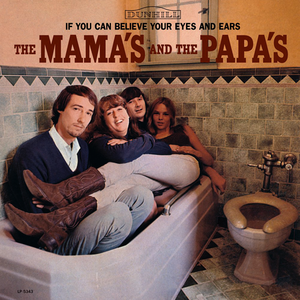
The Mamas & the Papas
If You Can Believe Your Eyes and Ears (1966)
John Phillips, Michelle Phillips
Released in 1965, this track defined the 'Sunshine Pop' sound while masking deep melancholy beneath lush four-part vocal harmonies. It remains a definitive anthem of the 1960s counterculture and a pinnacle of the West Coast folk-rock movement.
The song's harmony is defined by its use of the Aeolian mode (natural minor) combined with the sharp pull of the Harmonic Minor's major dominant (V). The progression C#m-B-A-B-G# is distinctive because it uses the VII (B) as a passing chord both descending and…
Written by John and Michelle Phillips in 1963 while they were living in New York City. John woke Michelle up in the middle of the night at the Albert Hotel to help him finish the lyrics after a walk through the city. The song was originally given to Barry McGu…
“The song features an alto flute solo, which was rare for pop music at the time.”
The song's harmony is defined by its use of the Aeolian mode (natural minor) combined with the sharp pull of the Harmonic Minor's major dominant (V). The progression C#m-B-A-B-G# is distinctive because it uses the VII (B) as a passing chord both descending and ascending, creating a 'circular' feeling that evokes the repetitive, obsessive nature of the protagonist's homesickness. The brief touch upon the III chord (E major) provides a flicker of the 'California' light before the G#7 dominant pulls the listener back into the 'grey' New York winter of the C# minor tonic.
Written by John and Michelle Phillips in 1963 while they were living in New York City. John woke Michelle up in the middle of the night at the Albert Hotel to help him finish the lyrics after a walk through the city. The song was originally given to Barry McGuire to record, but The Mamas and the Papas eventually recorded their own version using the same backing track with a replaced vocal lead and an added flute solo.
Released in 1965, this track defined the 'Sunshine Pop' sound while masking deep melancholy beneath lush four-part vocal harmonies. It remains a definitive anthem of the 1960s counterculture and a pinnacle of the West Coast folk-rock movement.
Detailed analysis of this section is not yet available for this song.
Genre
Folk Rock
Era
60s
Mood
Melancholic
Tempo
Mid-tempo
Key
Minor
Texture
Layered
Sound
Vocal-focused
Feel
Straight
8.4M
Plays
1.2M
Listeners
729K
Genius Views
20
Annotations
100%
Popularity
2:40
Duration
4/4
Time
From the album liner
Harmony The song's harmony is defined by its use of the Aeolian mode (natural minor) combined with the sharp pull of the Harmonic Minor's major dominant (V). The progression C#m-B-A-B-G# is distinctive because it uses the VII (B) as a passing chord both descending and ascending, creating a 'circular' feeling that evokes the repetitive, obsessive nature of the protagonist's homesickness. The brief touch upon the III chord (E major) provides a flicker of the 'California' light before the G#7 dominant pulls the listener back into the 'grey' New York winter of the C# minor tonic. Deep Analysis Available Detailed analysis of this section is not yet available for this song. Request Full Analysis
No musician information available for this song yet.
Composition Written by John and Michelle Phillips in 1963 while they were living in New York City. John woke Michelle up in the middle of the night at the Albert Hotel to help him finish the lyrics after a walk through the city. The song was originally given to Barry McGuire to record, but The Mamas and the Papas eventually recorded their own version using the same backing track with a replaced vocal lead and an added flute solo. Inspiration: Michelle Phillips' homesickness for California during a cold New York winter. Specific lyrics were inspired by a walk through Central Park and a visit to St. Patrick's Cathedral. Recording Studio: Western Recorders Producer: Lou Adler The song features an alto flute solo, which was rare for pop music at the time. The version we know used the same backing track as Barry McGuire’s original version, but with his lead vocals wiped and replaced. P.F. Sloan played the famous 12-string guitar introduction.
Chord Sheet Chords Used Hide functions C#m i T B VII D A VI T B VII D G#sus4 Vsus4 D G# V D Progression by Section Chorus C#m i T B VII T A VI B VII T G#sus4 Vsus4 D G# V Verse C#m i T B VII T A VI B VII T G#sus4 Vsus4 D G# V D A VI E III G#7 V7 D C#m i T A VI G#sus4 Vsus4 D G# V Chord Fingerings C#m Standard B Standard A Standard B Standard G#sus4 Standard G# Standard Harmony Analysis The song's harmony is defined by its use of the Aeolian mode (natural minor) combined with the sharp pull of the Harmonic Minor's major dominant (V). The progression C#m-B-A-B-G# is distinctive because it uses the VII (B) as a passing chord both descending and ascending, creating a 'circular' feeling that evokes the repetitive, obsessive nature of the protagonist's homesickness. The brief touch upon the III chord (E major) provides a flicker of the 'California' light before the G#7 dominant pulls the listener back into the 'grey' New York winter of the C# minor tonic. Find Tabs & Chords Songsterr Interactive tabs Ultimate Guitar Chords & tabs Cifra Club Chords
🎶 Similar Tracks The House of the Rising Sun The Animals Paint It Black The Rolling Stones Monday, Monday The Mamas & the Papas Happy Together The Turtles Dream a Little Dream of Me The Mamas & the Papas Good Vibrations The Beach Boys 🎤 More by The Mamas & the Papas California Dreamin' - Single Version 11.5M plays California Dreamin' 8.4M plays Dream a Little Dream of Me 5.4M plays Dedicated To The One I Love 3.2M plays Monday, Monday - Single Version 921K plays Snowqueen Of Texas 1.0M plays View all The Mamas & the Papas songs → Lyrics View Lyrics on Genius
