There Is a Light That Never Goes Out

There Is a Light That Never Goes Out

The Smiths

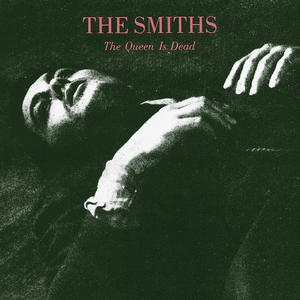
From the album

release) (1986)

Written by

Morrissey, Johnny Marr

Key:F♯ minor
Duration:4:04

Listen to the Song

Summary

The Smiths' most emotionally powerful song pairs Johnny Marr's shimmering guitar arpeggios and synthesized strings with Morrissey's darkly romantic lyrics about desperate desire and transcendent love. Featured on The Queen Is Dead (1986), it has become one of the most celebrated songs in rock history, ranked among the greatest of all time by NME and Rolling Stone.

indie rockjangle pop80s alternativeThe Smithsromantic

Musical Analysis

The harmony of 'There Is a Light That Never Goes Out' is deceptively simple — a three-chord ascending progression (i–III–IV) that avoids traditional dominant resolution entirely. This harmonic suspension perfectly serves the song's emotional core: an unresolve…

Chords

verse:F♯m - A - B
chorus:F♯m - A - B

History

The Smiths began working on the song during their late-1985 recording sessions. Johnny Marr composed the ascending F♯m–A–B chord sequence, which he deliberately borrowed from the Rolling Stones' cover of Marvin Gaye's 'Hitch Hike' as an in-joke to see if criti…

“Morrissey was initially skeptical about using synthesized strings, but the lack of budget for a real string ensemble and the band's reluctance to allow outsiders into the recording…”

Full Musical Analysis

The harmony of 'There Is a Light That Never Goes Out' is deceptively simple — a three-chord ascending progression (i–III–IV) that avoids traditional dominant resolution entirely. This harmonic suspension perfectly serves the song's emotional core: an unresolved longing that never quite arrives. Marr's deliberate borrowing of the chord sequence from the Rolling Stones' cover of Marvin Gaye's 'Hitch Hike' roots this indie anthem in classic rock and soul tradition, while the layered synthesized strings on the E-mu Emulator add orchestral richness to an otherwise straightforward harmonic framework. The flute section and guitar break in companion song 'Bigmouth Strikes Again' are both based on a C♯ minor arpeggio figure that connects the two compositions.

The Smiths began working on the song during their late-1985 recording sessions. Johnny Marr composed the ascending F♯m–A–B chord sequence, which he deliberately borrowed from the Rolling Stones' cover of Marvin Gaye's 'Hitch Hike' as an in-joke to see if critics would instead credit the Velvet Underground's 'There She Goes Again.' The song was written in tandem with 'Bigmouth Strikes Again,' and both share the same key and similar chord structures. Morrissey's lyrics drew on themes of escape from domestic misery and desperate romantic longing, with narrative parallels to James Dean's Rebel Without a Cause.

The Smiths' most emotionally powerful song pairs Johnny Marr's shimmering guitar arpeggios and synthesized strings with Morrissey's darkly romantic lyrics about desperate desire and transcendent love. Featured on The Queen Is Dead (1986), it has become one of the most celebrated songs in rock history, ranked among the greatest of all time by NME and Rolling Stone.

Deep Analysis Available

Detailed analysis of this section is not yet available for this song.

Song DNA

Genre

Rock

Era

80s

Mood

Melancholic

Tempo

Mid-tempo

Key

Minor

Texture

Layered

Sound

Guitar-driven

Feel

Straight

Explore More

Listen & Learn

Statistics

10.2M

Plays

955K

Listeners

1.1M

Genius Views

9

Annotations

100%

Popularity

4:04

Duration

4/4

Time

Credits

Written by

MorrisseyJohnny Marr

Produced by

MorrisseyJohnny Marr

From the album release)