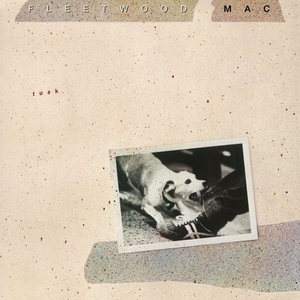
Tusk
Fleetwood Mac
Lindsey Buckingham
Listen to the Song
Summary
Written by Lindsey Buckingham as a statement against the expectations set by 'Rumours', 'Tusk' strips away sleek production and replaces it with dampened drums, a looped tape, found sounds, and the USC Marching Band. A #8 US Billboard entry certified silver in the UK, it is one of the most unconventional top-ten hits in rock history. Its influence on post-punk and alternative rock is audible in the way it weaponizes rhythmic and harmonic simplicity.
Musical Analysis
Harmonically, 'Tusk' is minimal by design — a compact set of major-key chords cycling under a drum loop that carries all the compositional weight. The interest lies in the layering of textures: the tape-looped percussion, the USC Marching Band, and scattered f…
Chords
History
The song grew from a rehearsal riff Lindsey Buckingham used for sound-checks, known backstage as 'Stage Riff'. Mick Fleetwood proposed making it the title track for the still-unnamed album after the band played the riff every night on tour with the intention o…
“The USC Marching Band was brought in to perform on the track, giving the song its distinctive martial, stadium-march character”
Full Musical Analysis
Harmonically, 'Tusk' is minimal by design — a compact set of major-key chords cycling under a drum loop that carries all the compositional weight. The interest lies in the layering of textures: the tape-looped percussion, the USC Marching Band, and scattered found sounds create depth that no elaborate chord sequence could replicate. Buckingham's decision to strip the harmony back was a direct aesthetic response to 'Rumours', demonstrating that radical simplicity can carry as much intent as complexity.
The song grew from a rehearsal riff Lindsey Buckingham used for sound-checks, known backstage as 'Stage Riff'. Mick Fleetwood proposed making it the title track for the still-unnamed album after the band played the riff every night on tour with the intention of developing it further. Early studio attempts stalled, and the band returned to it a few months later. Buckingham brought a refined version and worked with Christine McVie to shape the chord progression. He called the track 'the centerpiece' of the album — an explicit statement against the polished sound of 'Rumours', saying it 'embodies the spirit of rebelling against those expectations in every way possible.' The title itself emerged because Mick Fleetwood had taken to saying the word constantly; Buckingham noted it carried no particular significance beyond being 'a nice sounding word'.
Written by Lindsey Buckingham as a statement against the expectations set by 'Rumours', 'Tusk' strips away sleek production and replaces it with dampened drums, a looped tape, found sounds, and the USC Marching Band. A #8 US Billboard entry certified silver in the UK, it is one of the most unconventional top-ten hits in rock history. Its influence on post-punk and alternative rock is audible in the way it weaponizes rhythmic and harmonic simplicity.
Deep Analysis Available
Detailed analysis of this section is not yet available for this song.
Song DNA
Genre
Rock
Era
70s
Mood
Aggressive
Tempo
Mid-tempo
Key
Major
Texture
Sparse
Sound
Guitar-driven
Feel
Syncopated
Explore More
More by Fleetwood Mac
See all songs →Similar Songs
Explore related
Statistics
1.8M
Plays
347K
Listeners
158K
Genius Views
6
Annotations
100%
Popularity
3:36
Duration
4/4
Time
Credits
Written by
Produced by
Featuring
Chord Sheet
Chords Used
Progression by Section
Chorus
Verse