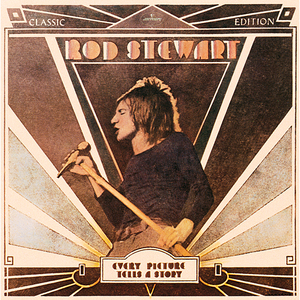
Maggie May
Rod Stewart
Rod Stewart
Listen to the Song
Summary
Released in 1971 as part of Every Picture Tells a Story, 'Maggie May' turned Rod Stewart from a talented vocalist into a solo superstar. Built on a deceptively simple folk-rock arrangement featuring acoustic guitar, mandolin, and Stewart's raspy storytelling, the song drew from his real teenage experience at the 1961 Beaulieu Jazz Festival. Originally relegated to the B-side of 'Reason to Believe', it became a simultaneous #1 hit in the US, UK, Australia, and Canada.
Musical Analysis
Maggie May's harmony is deceptively simple, built almost entirely on open-position acoustic guitar chords. The signature V-IV-I verse progression reverses the expected cadential direction, creating a laid-back, conversational quality that perfectly suits Stewa…
Chords
History
Rod Stewart co-wrote 'Maggie May' with guitarist Martin Quittenton, drawing directly from his own teenage experiences. The song tells the story of a young man's conflicted relationship with an older woman, capturing both the thrill and regret of the affair. St…
“Recorded in just two takes during one session”
Full Musical Analysis
Maggie May's harmony is deceptively simple, built almost entirely on open-position acoustic guitar chords. The signature V-IV-I verse progression reverses the expected cadential direction, creating a laid-back, conversational quality that perfectly suits Stewart's narrative delivery. The shift to ii-IV-V-I in the chorus provides the only real harmonic tension and resolution, making the emotional peaks feel earned despite the minimal chord vocabulary.
Rod Stewart co-wrote 'Maggie May' with guitarist Martin Quittenton, drawing directly from his own teenage experiences. The song tells the story of a young man's conflicted relationship with an older woman, capturing both the thrill and regret of the affair. Stewart initially had little confidence in the track, later admitting the record company didn't believe in the song either.
Released in 1971 as part of Every Picture Tells a Story, 'Maggie May' turned Rod Stewart from a talented vocalist into a solo superstar. Built on a deceptively simple folk-rock arrangement featuring acoustic guitar, mandolin, and Stewart's raspy storytelling, the song drew from his real teenage experience at the 1961 Beaulieu Jazz Festival. Originally relegated to the B-side of 'Reason to Believe', it became a simultaneous #1 hit in the US, UK, Australia, and Canada.
Deep Analysis Available
Detailed analysis of this section is not yet available for this song.
Song DNA
Genre
Rock
Era
70s
Mood
Nostalgic
Tempo
Mid-tempo
Key
Major
Texture
Full Band
Sound
Acoustic
Feel
Shuffle
Explore More
More by Rod Stewart
See all songs →Similar Songs
Explore related
Statistics
3.6M
Plays
712K
Listeners
151K
Genius Views
14
Annotations
100%
Popularity
5:47
Duration
4/4
Time
Credits
Written by
Produced by
Chord Sheet
Chords Used
Progression by Section
Chorus
Verse