God Only Knows
The Beach Boys
Brian Wilson, Tony Asher
Listen to the Song
Search for videoAt a glance
- Key
- E Major
- Time signature
- 4/4
- Main progression
- bVII/V–v6–ii7–I–IV–I6–ii7–V7
- Chords used
- G/D · Em6 · Bm7 · A · D · A/C# · E7 · E/G# · F#m7 · B7 · D/A · Bm6
Summary
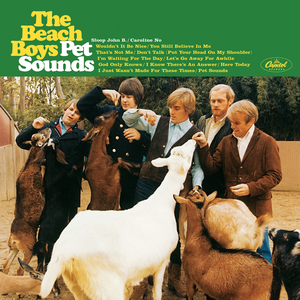
Featured on the seminal 1966 album 'Pet Sounds', this track is celebrated for its sophisticated orchestration and innovative use of non-standard instruments. It stands as a pinnacle of Brian Wilson's production genius, famously lauded by Paul McCartney as the greatest song ever written.
Chord Sheet
Chords Used
Progression by Section
Bridge
Chorus
Verse
Chord Diagrams
N/A
N/A
N/A
N/A
N/A
N/A
N/A
Musical Analysis
God Only Knows is a masterpiece of baroque pop and harmonic ambiguity. It is distinctive for its 'weak tonal center'—while the song is nominally in E Major, it avoids a root-position tonic chord for nearly its entire duration, creating a feeling of suspension…
History
Written by Brian Wilson and lyricist Tony Asher in early 1966, the song was a collaborative effort where Wilson composed the music while Asher handled the words. The opening line 'I may not always love you' was considered a bold and risky way to begin a love s…
“It was one of the first commercial pop songs to use 'God' in its title.”
Full musical analysis
God Only Knows is a masterpiece of baroque pop and harmonic ambiguity. It is distinctive for its 'weak tonal center'—while the song is nominally in E Major, it avoids a root-position tonic chord for nearly its entire duration, creating a feeling of suspension and longing that matches the lyrical themes. The use of inverted chords (slash chords) ensures a smooth, stepwise bassline that prioritizes melodic movement over functional 'stomp.' The modulation in the bridge to G major (a minor third up) is a sophisticated technique that provides a lift before returning to the ethereal, cyclical nature of the main theme.
Written by Brian Wilson and lyricist Tony Asher in early 1966, the song was a collaborative effort where Wilson composed the music while Asher handled the words. The opening line 'I may not always love you' was considered a bold and risky way to begin a love song, but Wilson insisted on its honesty.
Featured on the seminal 1966 album 'Pet Sounds', this track is celebrated for its sophisticated orchestration and innovative use of non-standard instruments. It stands as a pinnacle of Brian Wilson's production genius, famously lauded by Paul McCartney as the greatest song ever written.
Some sections are still pending
6 of 12 sections are ready. Ask for the rest and this song moves up our analysis queue.
Song DNA
Genre
Pop
Era
60s
Mood
Uplifting
Tempo
Mid-tempo
Key
Major
Texture
Orchestral
Sound
Vocal-focused
Feel
Straight
Explore More
Explore related
Statistics
4.4M
Plays
788K
Listeners
652K
Genius Views
10
Annotations
100%
Popularity
2:54
Duration
4/4
Time