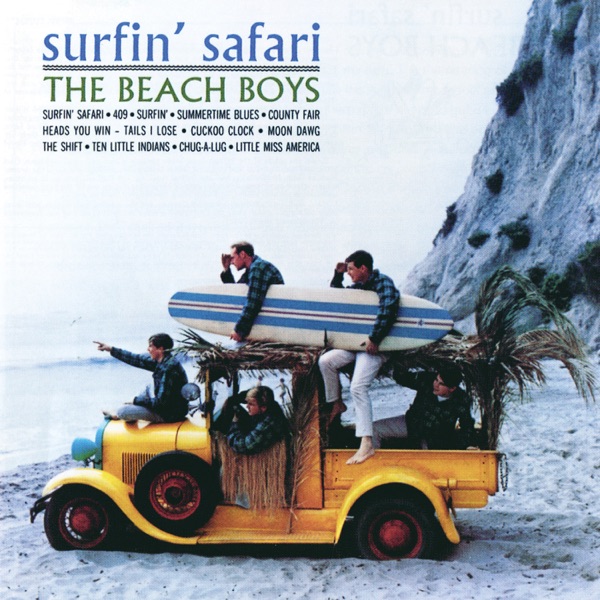
Surfin' Safari
The Beach Boys
Surfin’ Safari (1962)
Mike Love, Brian Wilson
Listen to the Song
Summary
Released in 1962 as their debut single for Capitol Records, 'Surfin' Safari' became a foundational track for the surf rock genre. It established the band's signature blend of rock and roll energy and intricate vocal harmonies, centered around the burgeoning Southern California youth culture.
Musical Analysis
The harmonic backbone of 'Surfin' Safari' is a masterclass in translating Chuck Berry’s guitar-driven rock into a vocal-heavy pop format. Brian Wilson famously noted that the song was built on a simple piano pattern, but the final recording—pitched up at the i…
Chords
History
After the success of their first single 'Surfin'', Dennis Wilson (the only actual surfer in the band) suggested to Brian Wilson that he should write more songs about the burgeoning Southern California surf culture. Brian composed a melody on the piano, attempt…
“It was the first Beach Boys recording to feature their trademark counterpoint vocal harmonies.”
📝 Lyrics
energetic · optimistic · youthfulTheme
The celebration of surf culture and the pursuit of youthful adventure.
Surface
A literal description of a group of friends loading up their station wagon to go on a surfing trip to famous California beaches.
Deeper meaning
The song serves as a foundational text for the 'California Myth,' framing leisure and subculture as a legitimate form of American identity. It redefines the 'safari'—traditionally a colonial or predatory expedition—into a benign, community-focused quest for fun, marking the 1960s shift toward youth-centric lifestyles.
Symbols
Full Musical Analysis
The harmonic backbone of 'Surfin' Safari' is a masterclass in translating Chuck Berry’s guitar-driven rock into a vocal-heavy pop format. Brian Wilson famously noted that the song was built on a simple piano pattern, but the final recording—pitched up at the insistence of his father, Murry Wilson—takes on a bright, energetic quality in the key of A Major. The most striking feature is the use of the flattened seventh chord (G major in the key of A) during the chorus. This subtonic movement creates a 'Mixolydian' flavor that became a hallmark of the surf sound, providing a sense of rolling motion and outdoor adventure that perfectly mirrors the lyrics. Beyond the basic I-IV-V foundations of the verses, the song introduces the Beach Boys' burgeoning interest in vocal counterpoint. While the lead guitar handles the driving, treble-heavy riffs, the backing vocals don't just mimic the lead; they provide a rhythmic response that acts almost as a secondary harmonic instrument. This layering, combined with the 'thin' guitar tone and the enthusiastic transitions between the chorus and verse, established the sonic blueprint for the band’s early career. It’s a deceptively simple arrangement that prioritizes forward momentum and youthful energy over formal harmonic complexity.
After the success of their first single 'Surfin'', Dennis Wilson (the only actual surfer in the band) suggested to Brian Wilson that he should write more songs about the burgeoning Southern California surf culture. Brian composed a melody on the piano, attempting to mimic the rhythmic style of Chuck Berry's guitar playing. Mike Love assisted with the lyrics, and the specific surfing terminology and local beach names (like Malibu and Rincon) were provided by Jimmy Bowles, the brother of Brian's then-girlfriend Judy Bowles.
Released in 1962 as their debut single for Capitol Records, 'Surfin' Safari' became a foundational track for the surf rock genre. It established the band's signature blend of rock and roll energy and intricate vocal harmonies, centered around the burgeoning Southern California youth culture.
Deep Analysis Available
Detailed analysis of this section is not yet available for this song.
Song DNA
Genre
Rock
Era
60s
Mood
Uplifting
Tempo
Upbeat
Key
Major
Texture
Full Band
Sound
Guitar-driven
Feel
Driving
Explore More
More by The Beach Boys
See all songs →Similar Songs
Explore related
Statistics
834K
Plays
221K
Listeners
66K
Genius Views
9
Annotations
100%
Popularity
2:02
Duration
4/4
Time
Credits
Written by
Produced by
From the album Good Vibrations: Thirty Years of the Beach Boys
Chord Sheet
Chords Used
Progression by Section
Chorus
Verse