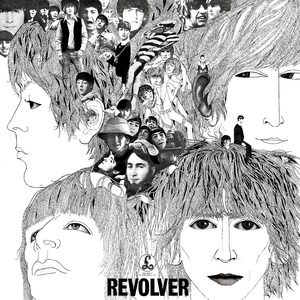
Got to Get You into My Life
The Beatles
Lennon–McCartney, Paul McCartney, John Lennon
Listen to the Song
At a glance
- Key
- F major
- Time signature
- 4/4
- Main progression
- I–IV–ii–V7
- Chords used
- F · F7 · Bb · Bbm · Gm · C7
Summary
Released on Revolver in August 1966, 'Got to Get You into My Life' was Paul McCartney's response to discovering marijuana — not a romantic declaration, as he later confirmed, but 'an ode to pot, like someone else might write an ode to chocolate or a good claret.' The arrangement pivoted from an early harmonium-and-guitar demo toward Memphis soul and Motown brass, courtesy of a close-miked horn section added on 18 May 1966 — the first time the Beatles had ever used one in the studio. That decision gave the track a rawness and urgency unlike anything else on the album, and the song has kept circulating ever since: a 1976 single reached number one in Canada, and Earth, Wind & Fire's 1978 cover cracked the US top ten.
Chord Sheet
Chords Used
Progression by Section
Chorus
Verse
Chord Diagrams
Musical Analysis
The harmony is a vehicle for the brass arrangement rather than a structural feature in its own right. The I–I7–IV–iv movement comes straight from Stax and Motown vocabulary, and McCartney deploys it cleanly: the borrowed iv (Bbm) introduces the only chromatic…
History
Paul McCartney wrote 'Got to Get You into My Life' in early 1966 following his first encounters with marijuana. Though officially credited to Lennon–McCartney, McCartney was the sole author and lead vocalist. In Barry Miles' 1997 biography Paul McCartney: Many…
“The 18 May 1966 brass session was the first time the Beatles used a horn section in the studio”
Full musical analysis
The harmony is a vehicle for the brass arrangement rather than a structural feature in its own right. The I–I7–IV–iv movement comes straight from Stax and Motown vocabulary, and McCartney deploys it cleanly: the borrowed iv (Bbm) introduces the only chromatic shadow in an otherwise open, jubilant major key. Everything else points toward the horn fanfare and McCartney's vocal as the real carriers of the song's energy.
Paul McCartney wrote 'Got to Get You into My Life' in early 1966 following his first encounters with marijuana. Though officially credited to Lennon–McCartney, McCartney was the sole author and lead vocalist. In Barry Miles' 1997 biography Paul McCartney: Many Years from Now, he confirmed: 'Got to Get You into My Life was one I wrote when I had first been introduced to pot ... So it's really a song about that, it's not to a person.' The lyrics — 'I took a ride, I didn't know what I would find there / Another road where maybe I could see some other kind of mind there' — read straightforwardly as a love song, which kept the meaning hidden from censors for over a decade.
Released on Revolver in August 1966, 'Got to Get You into My Life' was Paul McCartney's response to discovering marijuana — not a romantic declaration, as he later confirmed, but 'an ode to pot, like someone else might write an ode to chocolate or a good claret.' The arrangement pivoted from an early harmonium-and-guitar demo toward Memphis soul and Motown brass, courtesy of a close-miked horn section added on 18 May 1966 — the first time the Beatles had ever used one in the studio. That decision gave the track a rawness and urgency unlike anything else on the album, and the song has kept circulating ever since: a 1976 single reached number one in Canada, and Earth, Wind & Fire's 1978 cover cracked the US top ten.
Some sections are still pending
6 of 12 sections are ready. Ask for the rest and this song moves up our analysis queue.
Song DNA
Genre
Rock
Era
60s
Mood
Uplifting
Tempo
Upbeat
Key
Major
Texture
Full Band
Sound
Vocal-focused
Feel
Straight
Explore More
Similar Songs
Explore related
Statistics
2.7M
Plays
478K
Listeners
166K
Genius Views
8
Annotations
100%
Popularity
2:36
Duration
4/4
Time