Summary
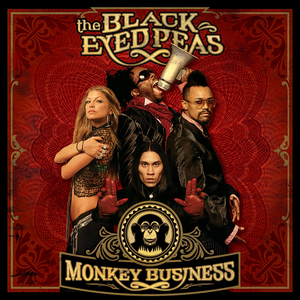
Will.i.am stumbled across Dick Dale's 'Misirlou' on a mislabeled compilation in Brazil, made the beat on a train, refined it on a flight to Tokyo, and recorded vocals in a Tokyo park — one of the more nomadic production stories in mid-2000s pop. The same riff Quentin Tarantino used to open Pulp Fiction in 1994 became the spine of a global club anthem that hit the top ten in 13 countries. Released in January 2006 as the fourth and final single from Monkey Business, it peaked at #18 on the US Billboard Hot 100.
Musical Analysis
The harmony in 'Pump It' is intentionally static: nearly the entire track floats on a Phrygian vamp lifted from Dick Dale's 'Misirlou.' The bII–i half-step tension gives the song a propulsive, Middle Eastern edge that would be impossible to achieve with standa…
Chords
History
Will.i.am bought a compilation CD in Brazil expecting something else; Dick Dale's 'Misirlou' was on it. The accidental purchase turned into an immediate creative spark. He blocked out the initial beat on a train, tightened the production on a subsequent flight…
“Will.i.am purchased the compilation containing 'Misirlou' by accident while in Brazil, initially frustrated by the wrong purchase”
Full Musical Analysis
The harmony in 'Pump It' is intentionally static: nearly the entire track floats on a Phrygian vamp lifted from Dick Dale's 'Misirlou.' The bII–i half-step tension gives the song a propulsive, Middle Eastern edge that would be impossible to achieve with standard pop chord sequences. There are no modulations, no bridge harmonies, no chorus lifts — all structural energy comes from percussion, vocal stacking, and production density. The result is a track that sidesteps conventional harmonic development entirely and succeeds on rhythmic and textural momentum alone.
Will.i.am bought a compilation CD in Brazil expecting something else; Dick Dale's 'Misirlou' was on it. The accidental purchase turned into an immediate creative spark. He blocked out the initial beat on a train, tightened the production on a subsequent flight to Tokyo, and then recorded the group's vocals in a park in the city — a track assembled piecemeal across three countries. Nicholas Roubanis, who wrote the original 'Misirlou' melody, received a co-writing credit alongside will.i.am, apl.de.ap, Fergie, and frequent collaborator Thomas Van Musser.
Will.i.am stumbled across Dick Dale's 'Misirlou' on a mislabeled compilation in Brazil, made the beat on a train, refined it on a flight to Tokyo, and recorded vocals in a Tokyo park — one of the more nomadic production stories in mid-2000s pop. The same riff Quentin Tarantino used to open Pulp Fiction in 1994 became the spine of a global club anthem that hit the top ten in 13 countries. Released in January 2006 as the fourth and final single from Monkey Business, it peaked at #18 on the US Billboard Hot 100.
Deep Analysis Available
Detailed analysis of this section is not yet available for this song.
Song DNA
Genre
Hip-Hop
Era
2000s
Mood
Euphoric
Tempo
Upbeat
Key
Modal
Texture
Layered
Sound
Guitar-driven
Feel
Groovy
Explore More
Explore related
Statistics
12.4M
Plays
1.8M
Listeners
291K
Genius Views
10
Annotations
100%
Popularity
3:33
Duration
4/4
Time
Credits
Written by
Produced by
From the album Monkey Business