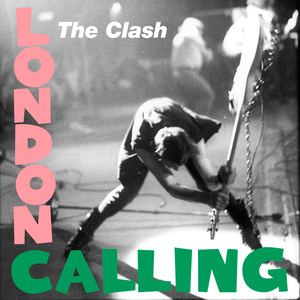
London Calling

London Calling

The Clash

From the album

London Calling (1979)

Written by

Mick Jones, Joe Strummer

Key:E minor
Duration:3:19

Listen to the Song

Summary

As the title track of their seminal double album, this 1979 classic signaled The Clash's evolution from raw punk into sophisticated social commentary. It masterfully combines nuclear-age anxiety with a driving rhythm, cementing its place as one of the most influential rock songs in history.

Punk RockPost-PunkPolitical RockBritish InvasionReggae-Rock

Musical Analysis

The harmony of 'London Calling' is distinctive for its use of the bII (F major) chord within an E minor context. While many punk songs rely on standard I-IV-V power chords, The Clash utilize the Phrygian second to create a sense of dread and geopolitical urgen…

Chords

verse:Em - G - Em - G - Em - G - Em - F
chorus:Em - G - Em - G
bridge:C - G - C - G

History

Written during a period of intense financial and legal pressure for the band, the song was developed at their rehearsal space, 'Rehearsal Rehearsals,' in Pimlico. Joe Strummer and Mick Jones collaborated to create a track that captured the dread of the late 19…

“The ending of the song features a sequence in Morse code that spells out S-O-S.”

Full Musical Analysis

The harmony of 'London Calling' is distinctive for its use of the bII (F major) chord within an E minor context. While many punk songs rely on standard I-IV-V power chords, The Clash utilize the Phrygian second to create a sense of dread and geopolitical urgency. The oscillation between Em and G creates a constant minor-major ambiguity that is resolved only by the jarring, dissonant F major chord, which functions as a pre-dominant tension that drags the listener back to the E minor tonic.

Written during a period of intense financial and legal pressure for the band, the song was developed at their rehearsal space, 'Rehearsal Rehearsals,' in Pimlico. Joe Strummer and Mick Jones collaborated to create a track that captured the dread of the late 1970s. The song's 'reggae-influenced' bassline was developed by Paul Simonon, while the signature guitar stabs and bird-call sound effects (actually Mick Jones' guitar feedback) gave it a haunting atmosphere.

As the title track of their seminal double album, this 1979 classic signaled The Clash's evolution from raw punk into sophisticated social commentary. It masterfully combines nuclear-age anxiety with a driving rhythm, cementing its place as one of the most influential rock songs in history.

Deep Analysis Available

Detailed analysis of this section is not yet available for this song.

Song DNA

Genre

Rock

Era

70s

Mood

Aggressive

Tempo

Upbeat

Key

Minor

Texture

Full Band

Sound

Guitar-driven

Feel

Syncopated

Explore More

Listen & Learn

Statistics

7.3M

Plays

1.1M

Listeners

580K

Genius Views

21

Annotations

100%

Popularity

3:19

Duration

4/4

Time

Credits

Written by

Mick JonesJoe Strummer

Produced by

Guy Stevens

From the album London Calling