Last Train to Clarksville

Last Train to Clarksville

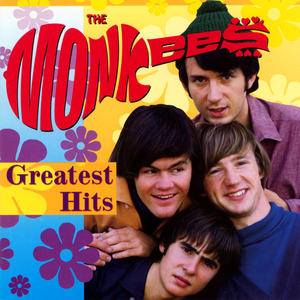
The Monkees

Written by

Tommy Boyce, Bobby Hart

Key:G Mixolydian
Duration:2:42

Listen to the Song

Summary

Released in 1966, this debut single catapulted The Monkees to stardom by reaching number one on the Billboard Hot 100. Written by Tommy Boyce and Bobby Hart, the track utilized a driving guitar riff to emulate the British Invasion sound while masking a poignant protest message within its lyrics.

Pop RockJangle Pop1960sBritish Invasion StyleProtest Song

Musical Analysis

The song's harmony is defined by its refusal to use a traditional V (D major) dominant chord. Instead, it utilizes G Mixolydian, relying on the bVII (F) to create harmonic motion. This approach reflects the influence of 1966-era Beatles compositions, where blu…

Chords

Verse:G7
Chorus:G - C7
Bridge:G - F
G7GC7F

History

The song depicts a man calling the woman he loves, asking her to meet him at a train station before he departs for what might be an permanent absence. Although war is not explicitly mentioned, the final lyric, 'And I don't know if I'm ever coming home,' serves…

“Micky Dolenz is the only member of The Monkees to appear on the track.”

Full Musical Analysis

The song's harmony is defined by its refusal to use a traditional V (D major) dominant chord. Instead, it utilizes G Mixolydian, relying on the bVII (F) to create harmonic motion. This approach reflects the influence of 1966-era Beatles compositions, where blues-based structures were merged with pop sensibilities. The primary tension arises from the iconic guitar riff's use of the flat seventh, which dictates the entire harmonic vocabulary of the track.

The song depicts a man calling the woman he loves, asking her to meet him at a train station before he departs for what might be an permanent absence. Although war is not explicitly mentioned, the final lyric, 'And I don't know if I'm ever coming home,' serves as an indirect reference to a soldier leaving for the Vietnam War.

Released in 1966, this debut single catapulted The Monkees to stardom by reaching number one on the Billboard Hot 100. Written by Tommy Boyce and Bobby Hart, the track utilized a driving guitar riff to emulate the British Invasion sound while masking a poignant protest message within its lyrics.

Deep Analysis Available

Detailed analysis of this section is not yet available for this song.

Song DNA

Genre

Pop Rock

Era

60s

Mood

Bittersweet

Tempo

Upbeat

Key

Major

Texture

Full Band

Sound

Guitar-driven

Feel

Driving

Explore More

Listen & Learn

Statistics

583K

Plays

168K

Listeners

28K

Genius Views

3

Annotations

100%

Popularity

2:42

Duration

4/4

Time

Credits

Written by

Tommy BoyceBobby Hart

Produced by

Tommy BoyceBobby Hart

Chord Sheet

Transpose0

Chords Used

G7
G
C7
F

Progression by Section

Bridge

G
F

Chorus

G
C7

Verse

G7

Chord Diagrams

G7
G
C7✕
F