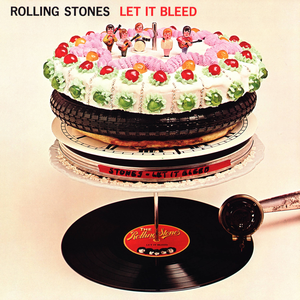
Listen to the Song
Song DNA
Genre
Rock
Era
60s
Mood
Dark
Tempo
Mid-tempo
Key
Blues
Texture
Layered
Sound
Guitar-driven
Feel
Groovy
The Rolling Stones
WMMR Exclusive Rolling Stones Interview (1991)
Mick Jagger, Keith Richards
Serving as the definitive opener to the 1969 album Let It Bleed, this track is a masterclass in tension-building rock. It is legendary for its churning guitar riffs and Merry Clayton's soul-piercing guest vocals, reflecting a world on the brink of collapse.
The song's harmony is defined by a 'dark major' sound. By using a Major tonic (C#) alongside the bVII (B) and bVI (A) chords borrowed from the parallel minor, it avoids the brightness of standard major keys and the pure sadness of minor keys. This creates a 'h…
Keith Richards wrote the song's signature opening and melody in London while Mick Jagger was away filming the movie 'Performance'. Richards was sitting in an apartment during a massive rainstorm, which led to the opening line. Jagger later contributed lyrics t…
“Merry Clayton was summoned to the studio at midnight while pregnant and recorded her vocals in her pajamas.”
The song's harmony is defined by a 'dark major' sound. By using a Major tonic (C#) alongside the bVII (B) and bVI (A) chords borrowed from the parallel minor, it avoids the brightness of standard major keys and the pure sadness of minor keys. This creates a 'heavy' rock sound that is harmonically unsettling yet grounded in blues traditions. The use of Open E tuning allows for the specific suspended voicings that characterize the intro.
Keith Richards wrote the song's signature opening and melody in London while Mick Jagger was away filming the movie 'Performance'. Richards was sitting in an apartment during a massive rainstorm, which led to the opening line. Jagger later contributed lyrics that expanded the theme to reflect the social and political unrest of the era.
Serving as the definitive opener to the 1969 album Let It Bleed, this track is a masterclass in tension-building rock. It is legendary for its churning guitar riffs and Merry Clayton's soul-piercing guest vocals, reflecting a world on the brink of collapse.
Detailed analysis of this section is not yet available for this song.
Genre
Rock
Era
60s
Mood
Dark
Tempo
Mid-tempo
Key
Blues
Texture
Layered
Sound
Guitar-driven
Feel
Groovy
12.8M
Plays
1.6M
Listeners
561K
Genius Views
11
Annotations
100%
Popularity
4:30
Duration
4/4
Time
From the album sleeve
Intro
Chorus
Verse
Chords C# 4 ✕ B ✕ A ✕ C# B A Harmony The song's harmony is defined by a 'dark major' sound. By using a Major tonic (C#) alongside the bVII (B) and bVI (A) chords borrowed from the parallel minor, it avoids the brightness of standard major keys and the pure sadness of minor keys. This creates a 'heavy' rock sound that is harmonically unsettling yet grounded in blues traditions. The use of Open E tuning allows for the specific suspended voicings that characterize the intro. Deep Analysis Available Detailed analysis of this section is not yet available for this song. Notify me when it's ready Request Full Analysis
Composition Keith Richards wrote the song's signature opening and melody in London while Mick Jagger was away filming the movie 'Performance'. Richards was sitting in an apartment during a massive rainstorm, which led to the opening line. Jagger later contributed lyrics that expanded the theme to reflect the social and political unrest of the era. Inspiration: The song was inspired by the dark, violent atmosphere of the late 1960s, specifically the Vietnam War, social riots, and the sense of impending apocalypse. Richards also cited a literal storm he observed from a window as the catalyst for the 'shelter' motif. Recording Studio: Olympic Studios (London), Sunset Sound Recorders (Los Angeles) Producer: Jimmy Miller Merry Clayton was summoned to the studio at midnight while pregnant and recorded her vocals in her pajamas. Merry Clayton's voice famously cracks twice during her solo due to the intensity of her performance; Jagger's 'Whoo!' of amazement can be heard in the background. The Maton EG240 Supreme guitar played by Keith Richards reportedly fell apart or lost its top during the final take of the song. The harmonica played by Mick Jagger was recorded with heavy distortion to match the track's ominous tone.
Chord Sheet Transpose 0 Capo 0 1 2 3 4 5 6 7 Auto-scroll Print Reset Chords Used Hide functions C# I T B bVII D A bVI T Progression by Section Intro C# I T B bVII T A bVI Chorus C# I T B bVII T A bVI Verse C# I T B bVII T A bVI Chord Diagrams C# 4 ✕ B ✕ A ✕ Harmony Analysis The song's harmony is defined by a 'dark major' sound. By using a Major tonic (C#) alongside the bVII (B) and bVI (A) chords borrowed from the parallel minor, it avoids the brightness of standard major keys and the pure sadness of minor keys. This creates a 'heavy' rock sound that is harmonically unsettling yet grounded in blues traditions. The use of Open E tuning allows for the specific suspended voicings that characterize the intro. Find Tabs & Chords Songsterr Interactive tabs Ultimate Guitar Chords & tabs Cifra Club Chords
🎶 Similar Tracks Love in Vain The Rolling Stones You Can't Always Get What You Want The Rolling Stones All Along the Watchtower Jimi Hendrix White Room Cream Fortunate Son Creedence Clearwater Revival Sunshine of Your Love Cream 🎤 More by The Rolling Stones Paint It, Black 15.0M plays Gimme Shelter 12.8M plays Sympathy for the Devil 7.0M plays Paint It Black 6.7M plays Under My Thumb 5.5M plays You Can't Always Get What You Want 5.2M plays View all The Rolling Stones songs → Lyrics View Lyrics on Genius
Love in VainThe Rolling StonesYou Can't Always Get What You WantThe Rolling StonesAll Along the WatchtowerJimi HendrixWhite RoomCreamFortunate SonCreedence Clearwater RevivalSunshine of Your LoveCreamPaint It, Black15.0M playsGimme Shelter12.8M playsSympathy for the Devil7.0M playsPaint It Black6.7M playsUnder My Thumb5.5M playsYou Can't Always Get What You Want5.2M playsView all The Rolling Stones songs →