Wonderwall
Oasis
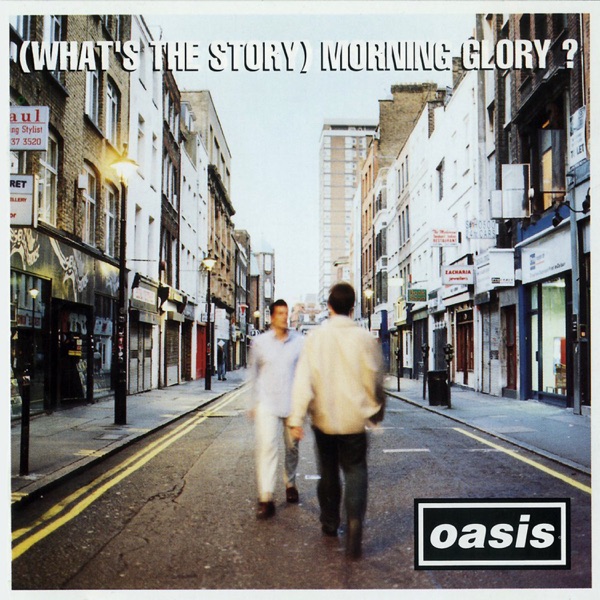
(What’s the Story) Morning Glory? (1995)
Listen to the Song
Summary
Serving as the centerpiece of '(What’s the Story) Morning Glory?', 'Wonderwall' defined the Britpop era with its iconic acoustic strumming and Liam Gallagher's raw, emotive vocals. It remains one of the most culturally significant rock songs in history, becoming the first 1990s track to surpass one billion streams on Spotify.
Musical Analysis
"Wonderwall" is a masterclass in guitar-driven harmony where the physical mechanics of the instrument dictate the song's emotional resonance. The core of its identity is an inverted pedal point; the guitarist's third and fourth fingers remain anchored on the t…
Chords
History
Written by Noel Gallagher in 1994, the song was originally titled 'Wishing Stone.' The final title was chosen after Noel saw a poster for George Harrison's 1968 film soundtrack 'Wonderwall Music' while at home. Liam Gallagher was given the choice between singi…
“Noel Gallagher originally wanted to sing the song himself but used it as a bargaining tool to get Liam to let him sing 'Don't Look Back in Anger'.”
📝 Lyrics
melancholic · hopeful · yearningTheme
Emotional salvation and the search for an anchor in a chaotic world
Surface
A confession to a close companion or romantic partner that they are the only thing keeping the narrator's life together.
Deeper meaning
While often viewed as a love song, Noel Gallagher has described it as being about an imaginary friend who comes to save you from yourself. It explores the universal human need for a 'Wonderwall'—a person, idea, or dream that acts as a protective barrier against the hardships of reality.
Symbols
Full Musical Analysis
The song features a relatively simple harmonic structure, primarily based on a chord progression that creates a melancholic yet hopeful feel.
The rhythm is straightforward and steady, driven by a moderate tempo and a 4/4 time signature.
The melody is memorable and easily singable, contributing to the song's widespread appeal.
Written by Noel Gallagher in 1994, the song was originally titled 'Wishing Stone.' The final title was chosen after Noel saw a poster for George Harrison's 1968 film soundtrack 'Wonderwall Music' while at home. Liam Gallagher was given the choice between singing 'Wonderwall' or 'Don't Look Back in Anger,' ultimately choosing 'Wonderwall' because he felt it sounded like a hit, despite his initial complaint that the early bassline sounded too 'funk' for the band.
Serving as the centerpiece of '(What’s the Story) Morning Glory?', 'Wonderwall' defined the Britpop era with its iconic acoustic strumming and Liam Gallagher's raw, emotive vocals. It remains one of the most culturally significant rock songs in history, becoming the first 1990s track to surpass one billion streams on Spotify.
Song DNA
Genre
Rock
Era
90s
Mood
Nostalgic
Tempo
Mid-tempo
Key
Major
Texture
Full Band
Sound
Acoustic-driven
Feel
Straight
Explore More
Similar Songs
Explore related
Listen & Learn
Statistics
4:38
Duration
87
BPM
4/4
Time
Chord Sheet
Song Structure
Verse-Chorus-Verse-Chorus-Bridge-Chorus
Chords Used
Chord Diagrams
N/A
N/A
N/A
N/A